About
In 2011, local Queens residents living along the long-abandoned LIRR Rockaway Beach Branch came together to advocate for its transformation into a vibrant public park.
This grassroots effort led to the creation of Friends of the QueensWay (FQW), a community-driven organization supported by hundreds of individuals and groups through petitions, fundraisers, cleanups, tours, and events. Their shared vision: to reimagine this 3.5-mile stretch as a thriving greenway for walkers, joggers, cyclists, and visitors from Queens and beyond. That same year, FQW partnered with Trust for Public Land to engage the community, gather input, and develop a plan to transform these 47 acres into an open space that connects neighborhoods, fosters cultural exchange, and drives economic growth.
Over the last 15 years since, FQW has developed an active steering committee of local residents and volunteers; hosted 150+ engagement events, tours and informational sessions; and partnered with local civic groups, community organizations, elected officials to turn this vision into reality. And now, with Phase 1 groundbreaking set for Fall 2026 by the New York Economic Development Corporation (NYCEDC) and NYC Parks, the QueensWay is a generational opportunity to turn a forgotten space into a park that offers better health, greener travel, and climate resiliency to countless people.


Photographs by Rick Darke




What is the QueensWay—and who owns the land?
The QueensWay runs along the former Rockaway Beach Branch of the Long Island Railroad (LIRR). The last train ran on this line in 1962, after which ownership of the corridor was transferred from the LIRR to the City of NY. The rail “right of way” was legally abandoned without a remaining rail easement or overlay of any kind.
The 3.5 mile long, 47-acre QueensWay site is entirely owned by the City of New York—40 acres of which are managed by the Department of Citywide Administrative Services (DCAS) and seven acres (passing through Forest Park) are under the jurisdiction of NYC Parks. Portions of the DCAS property are leased for various community uses, including sections of the parking lot for the Forest View Crescent Apartment Complex, the Ridgewood-Glendale Little League fields, and the Forest Hill Youth Athletic Association fields. It is our steadfast commitment for QueensWay to have little or no impact on these cherished community facilities.
What is the current status of project development?
The QueensWay has steadily advanced from a concept to an active capital project over the past several years. City Hall first committed funding in 2022, allowing NYC Parks to launch formal design work and a series of public workshops in 2023, followed by regular updates to local community boards.
Momentum continued when the City Council added capital dollars in 2025 to fully support Phase 1—otherwise known as the Metropolitan Hub, or MetHub— which will create a new greenway entrance, shaded paths, and community gathering space near Metropolitan Avenue.
Phase 1 is on track for construction to begin in late 2026, marking the first visible step towards transforming the full 3.5‑mile corridor into a connected, accessible linear park for central Queens. The project will be lead by the New York City Economic Development Corporation (NYCEDC).
Why are you not advocating for rail on this corridor?
Since rail use ended on the corridor, both the Metropolitan Transportation Authority (MTA) and the Port Authority (PANYNJ) have studied rail reactivation and concluded that it is not feasible due to cost, low ridership projections, environmental concerns, and opposition from directly adjacent communities.
In the lead-up to the MTA’s 20 Year Needs Capital Assessment (2023), the MTA and partners conducted a feasibility study, completed and shared in 2019, that determined the potential cost of rail reactivation could range anywhere between $6.8 billion and $8.1 billion, not including additional cost for real estate acquisitions. In the report, the MTA said the idea “did not score well in most metrics” and described the project as “high cost and [serving] a relatively modest number of riders.” In addition, rail reactivation entails the loss of seven acres of existing park space, which would require special legislation by the State Legislature to alienate parkland and find another seven acres in an area already with scarce outdoor space.
The QueensWay does not preclude rail. If the government chooses to fund and implement a rail line in the future, they will always reserve the right to do so. Discontinuing the current work on the QueensWay would only result in the loss of a chance to do something incredible for our neighborhood now.
Does the QueensWay design address the safety and security concerns of adjacent homeowners?
The QueensWay Plan includes design guidelines regarding safety. About one-third of the 3.5-mile corridor is adjacent to one and two-family homes, and among our guidelines are some specific principles related to these sections (known as the Northern and Southern Passages). They include:
- Entrances to the QueensWay will be limited to key intersections. Secure fencing will eliminate access at any other points.
- All efforts will be made to retain the existing mature trees and the wooded character of the site.
- Backyards of adjacent homes will be screened and secured.
- The pathways that run adjacent to homes will have vegetated buffers at the top of the embankment as well as secure fencing at the property line to physically and visually separate backyards and homes from visitors.
- The fencing will have plantings along it to provide additional screening.
- In addition, all activity spaces will be located away from adjacent homes and sited near existing non-residential amenities and highly-used public thoroughfares. The two lengths of the QueensWay that run by homes, referred to as the “Passages,” will be used for walking and cycling.
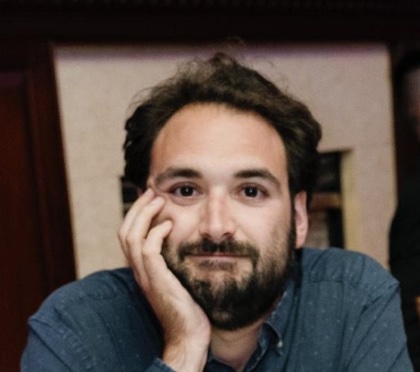 John Surico, Executive Director
Surico is a widely recognized writer, researcher and organizer who focuses on issues of mobility and open space. His reporting for over 50 local, national and international publications has established him as a reputable voice in urbanism. Most recently, he served as the Senior Fellow for Climate and Opportunity at the Center for an Urban Future, a leading think tank in New York City, where he led the Center’s research portfolio on parks and open spaces. His work helped catalyze the Play Fair coalition, the largest collection of parks advocates in a generation, and the single greatest one-year increase in parks maintenance dollars in recent city history.
Today, his research continues to spark action around sustainable parks revenue, permitting reform, and investments in Flushing Meadows-Corona Park, Queens’ signature green space. A born and raised New Yorker, Surico proudly comes from a long line of parkies, with a mother who cared for the horticulture at The Bronx’s Wave Hill and a father who worked in Forest Park; both grew up in Cypress Hills and Ozone Park, respectively. With his history and background, Surico recognizes the growing need for vibrant public space across Queens, where he’s resided for over a decade. It inspired his role as the chair of the 31st Ave Open Street Collective, facilitating one of the city’s most successful Open Streets every weekend for most of the year. Alongside elected officials, including then-Assemblymember Zohran Mamdani, that work has since inspired a redesign of 31st Avenue and livable streets efforts now being replicated citywide. Surico holds an MSc in Transport and City Planning from University College London, as well as a BA in Journalism and Politics from New York University. He teaches cities-focused writing at both institutions today. He lives in Astoria, Queens, with his partner, Angela, and cat, Kita.
FRIENDS OF THE QUEENSWAY BOARD MEMBERS
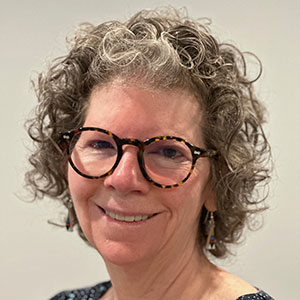
Andrea Crawford
Andrea is a Healthcare Attorney and Hospital Risk Manager in the public health care system. As a dedicated public servant, Andrea has been involved with Community Board 9 for over 20 years. When Andrea was chairperson, she founded the Rockaway Beach Branch Greenway which was the precursor to the QueensWay. Andrea, as a Board Member of the Friends of the QueensWay, continues to advocate for the QueensWay so that there can be safe areas for Queens residents to find beautiful open space, easy access to Forest Park and have a world class elevated park that connects them to the rest of the borough in their own backyards.
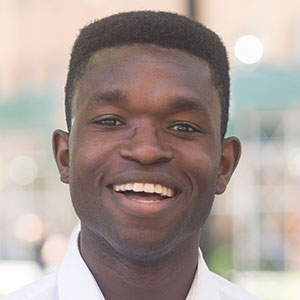 Doug McPherson
With more than 15 years of experience in the fields of urban planning, parks equity, and community health, Doug serves as Manager of the ReAL Edgemere Community Land Trust (CLT). In this role, Doug leads the CLT’s open space activation and resilient housing efforts—both key elements of the Resilient Edgemere Community Plan, which was released by the NYC Department of Housing Preservation and Development (HPD) in 2017. Over the past six years, he has worked to secure subsidies and entitlements for more than 5,000 units of senior, supportive, and family housing in his various roles at HPD and Empire State Development (ESD). Doug has also served on the Friends of the QueensWay steering committee and on Queens Community Board 10. He received a Master of City Planning from the Massachusetts Institute of Technology and a Bachelor of Arts from the University of Pennsylvania.
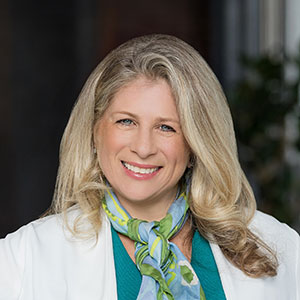
Allison Sesso
Allison is the President / CEO of Undue Medical Debt, a National nonprofit that relieves medical debt across the U.S., providing financial, physical, and emotional relief to people saddled with medical debt. Undue has relieved over $15 billion in debt for 10 million people in all 50 states.
Under Allison’s leadership, Undue Medical Debt has expanded its reach by working with a wide range of health care providers to purchase medical debt, working in partnership with states, counties, and cities on local medical debt relief initiatives, developing its capacity to highlight the impact of medical debt on families, and contributing effectively to the larger conversation around the root causes of medical debt. She has become a prominent voice on the topic of medical debt and is frequently interviewed by media outlets, including CBS Sunday Morning, NPR, the New York Times, and others. She was named one of the 100 Most Influential People in Healthcare for 2024 by Modern Healthcare Magazine.
Prior to joining Undue Medical Debt, Allison served as the Executive Director of the Human Services Council of New York (HSC), an association of 170 nonprofits delivering 90% of human services in New York City. She led negotiations with New York City and State government on behalf of the sector and successfully pushed for over $500 million in investments to address the nonprofit fiscal crisis.
During her tenure at HSC, Allison was appointed to the OneNYC Commission by Mayor Bill DeBlasio, responsible for developing a comprehensive plan for a sustainable and resilient city that addresses the profound social, economic, and environmental challenges ahead. She was also appointed to Chair to Hurricane Sandy Charitable Organizations and Houses of Worship Recovery Task Force, charged with developing recommendations to ensure key community institutions are better prepared to participate in disaster recovery efforts, 2017.
Allison’s work on behalf of the human services sector led City & State to recognize her as a top nonprofit leader in 2018 and 2019, one of the 25 most influential leaders in Manhattan in 2017, and one of New York City’s 100 “Most Responsible” in 2016. She again received the 100 “Most Responsible” award for the second time for her efforts at Undue Medical Debt.
For ten years, Allison served as Chair of Right to Be, a nonprofit working to end harassment in all forms.
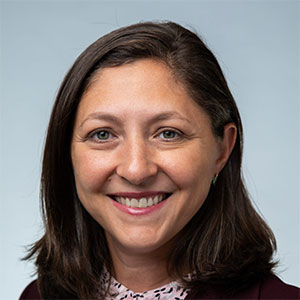 Karen Imas
Karen is a seasoned government relations, public affairs, and stakeholder engagement professional with more than 20 years of experience in the public, private, and non-profit sectors.
Karen is currently Director of Climate and Resiliency Policy at the Office of the NYC Comptroller. Formerly, she managed external affairs policy at Attentive Energy, a clean energy developer, where she supported the company’s public positioning across a diverse set of policy and regulatory issues at the local, state, and federal level. Prior to joining Attentive Energy, Karen served as the program and policy lead at the Waterfront Alliance, where she focused on advocacy for coastal resilience policy, maritime infrastructure, and revitalization of waterfront communities. She has also represented land use, infrastructure and non-profit clients for government relations firm, CMW Strategies. Karen is a Queens, NY native and lives in Forest Hills, Queens with her family. She serves on Queens CB6.
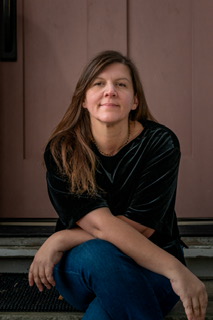 Sharon Levy
Sharon Levy is the Senior Vice President for Public Affairs at the YMCA of Greater New York and is responsible for all aspects of the organization’s public affairs, public policy, government relations, government funding, civic engagement and community partnerships portfolio. At the center of her world, both personal and professional is the desire to build, strengthen and support community.
During Sharon’s tenure at the YMCA, she has played a pivotal role in the expansion of services such as after school, PreK/3K, programs for New Americans, transitional housing and many more. She was also an integral part of the creation of new YMCA branches in Queens, the Bronx and Brooklyn. During the pandemic, Sharon helped facilitate the development of new community focused efforts at the Y including community markets, learning labs, expansion of their transitional housing portfolio and standing up multiple vaccination sites.
Sharon also leads the team that has increased voter registration and civic engagement activities citywide with the creation of the Make Your Voice Heard program that includes the launch of YMCA Branch Voter Activation and Community Convening events across all five boroughs. Key components include voter registration, voter education and a voter pledge.
Prior to joining the YMCA, Sharon held staff positions within all levels of government: U.S. House of Representatives, Office of the New York State Governor, Office of the Nassau County Executive and the New York City Council.
Sharon has a BA in political science and communications from the City University of New York at Queens College and a Masters in Public Administration from New York University’s Wagner School of Public Service. Sharon is also a mom of four (plus 3 dogs), co-facilitates a community organization that focuses on civic engagement and advocacy called the Women’s Action Group and is a proud member of the Friends of the QueensWay.

Ruben Ramales
Ruben, Assoc. AIA, NOMA, is a native New Yorker, raised in Woodhaven, Queens, whose work in fostering partnerships, collaboration, and engagement he attributes to his local experience and expertise. Ruben is a Senior Manager of Component Engagement with the American Institute of Architects, working across states to advance the impact and awareness of local AIA components. As the former Executive Director of the Queens Chapter of the American Institute of Architects (AIA Queens), Ruben holds a Bachelor of Architecture from the New York Institute of Technology. Ruben has led QueensWay Community Outreach and Engagement formerly as an Outreach Coordinator with the Trust for Public Land, a project partner of Friends of the QueensWay. Currently, Ruben also serves on the boards of Woodhaven Cultural & Historical Society, and Latimer House Museum. Ruben enjoys heading into Forest Park trails with his pit bull Lily when not partaking in professional or civic opportunities.
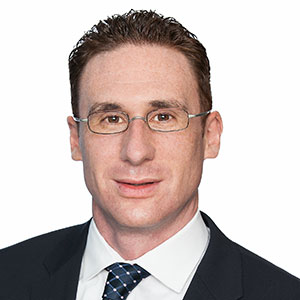 Travis Terry
Travis is the driving force behind Immortal Strategies, a boutique strategy consulting firm he founded in 2024 and currently leads as the CEO. The firm specializes in public-private partnerships and scaling organizations in New York, a testament to Travis’s entrepreneurial spirit and commitment to the success of cities.
For over 25 years, Travis has been at the forefront of change in New York City, creating billions of dollars of value for his clients by providing expert advice on public affairs, government relations, branding, and business strategy. He has been a vital strategic advisor to some of New York City’s most recognized corporate and non-profit brands, such as Macy’s, UPS, Times Square Alliance, Rudin Management, Industry City, Friends of the High Line, and the Museum of the Moving Image. His efforts have changed the landscape of NYC—creating public parks, raising hundreds of millions of dollars in public-sector financing, creating impactful laws, and securing project approvals for significant land use projects. Travis has also worked closely with hundreds of businesses to help them successfully expand or enter the New York City market.
Travis sits on the Board of Directors of the Friends of the QueensWay, which recently received $50+ million to build a new, 3.5 mile linear park in Central Queens, Coro New York, Association for a Better New York (ABNY) Foundation, Alliance for Flushing Meadows Corona Park and is on the Executive Committee of the Board of Directors of the Regional Plan Association. He also is the Chair of the NYC Board of Advisors of Power My Learning and has contributed to a variety of committees, including the Dean’s Advisory Council of the Cornell University College of Agriculture and Life Sciences, Queens Chamber of Commerce Tech Council, and the Executive Leadership Forum of British American Business. He has won numerous awards and is quoted frequently in the media.
He has a B.S. in Business Management and Marketing from Cornell University and is a graduate of Coro Leadership New York. Travis lives in Forest Hills, Queens with his wife and three kids and is a passionate sports fan.
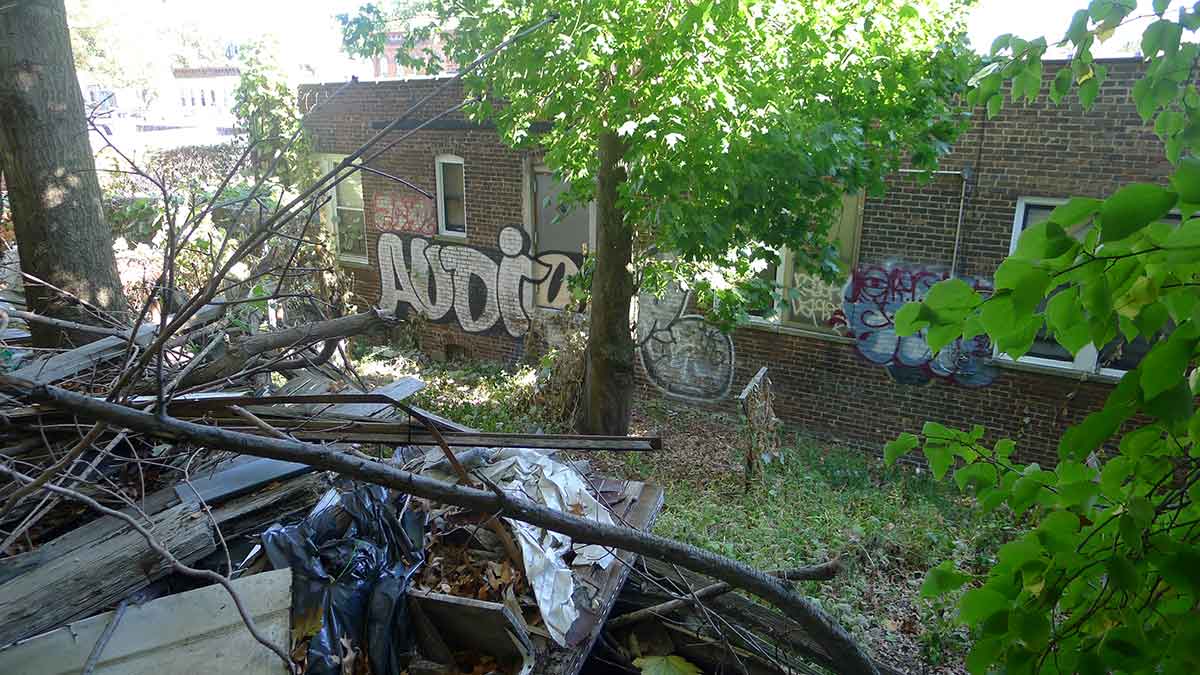
For more than 60 years, the old Rockaway Beach Branch line has been abandoned. As a result, many people are unaware of this hidden stretch of trees and dense undergrowth intermingling with the old rails, with viaduct bridges at road crossings providing the rare clue to the 3.5-mile path stretching from Rego Park to Ozone Park.
Dig into more of the history of the QueensWay and the plans to transform it into a vibrant greenway.
Friends of the QueensWay is grateful to the incredible supporters who are helping turn this trail into a reality.
Trust for Public Land
Queens Tourism Council
Queens Chamber of Commerce
Forest Hills Crescent Civic Association
Regional Plan Association
Forest Hills Youth Athletic Association
Indo-Caribbean Alliance
Richmond Hill Historical Society
Rails-to-Trails Conservancy
New Yorkers for Parks
Transportation Alternatives
Metro Village Forest Hills
New York League of Conservation Voters
Association for a Better New York
Citizens Committee for NYC
Ridgewood Glendale Little League
Center for an Urban Future
The Rajkumari Cultural Center
Center for Active Design
Queens Distance Runners
Earth Citizens Club of Queens NY
“Queens has a demonstrated need for more extensive and accessible open space, and the QueensWay is uniquely poised to fulfill those needs. The QueensWay will promote recreational and cultural opportunities while also connecting communities and facilitating alternative to the car. Queens communities experience many glaring inequities in parks access and transportation opportunities, and the QueensWay is the perfect way to address both of those issues.” — Queens Borough President Donovan Richards Jr.
““Queens, historically, has received less support than other boroughs when it comes to Park resources. That is why I am so proud to support the QueensWay and the vision it represents for Central Queens. The project is a culmination of working with area residents, businesses and students, to transform long-abandoned rail space into a safe, vibrant greenway that connects neighborhoods, improves public health, and strengthens local businesses. The City’s commitment to moving Phase One forward, even in the face of recent federal funding cuts, shows our determination to deliver for Queens residents. I look forward to continuing to partner with Friends of the QueensWay, the Trust for Public Land, and our neighbors to make this transformative project a reality.” — Council Member Lynn Schulman
“Investing in parkland is critical to the quality of life in Queens. The QueensWay project is an ambitious plan that has the potential to be the new gem of open space in the borough. The plan would provide sprawling public parkland and would be a treasured resource for local families, children and seniors, as well a boon for the environment and the Queens economy. I look forward to further progress resulting from the study in the weeks and months ahead. I applaud Friends of the QueensWay and the Trust for Public Land for their work in engaging community members each step of the way, and I know that they will continue to do so as the project moves forward.” — U.S. Rep. Grace Meng, (D) Queens
“Parks are too often neglected and QueensWay would offer more access to open space and parkland. Parks provide an economic benefit to local business, retail establishments and restaurants and people of all ages would be able to enjoy the recreational opportunities which this new green space would provide.” — Senator Toby Ann Stavisky, (D) Central Queens
“Having grown up near the long-abandoned railway and recognizing the potential it has to be a meaningful and substantive community resource, it is great to finally see a realistic proposal to do just that. The QueensWay Plan will provide our communities with a tremendous opportunity for investment into our local economy by showcasing our distinct neighborhoods, traditions and communities, all interconnected through a single, transformative, safe, family-friendly park. I look forward to continuing to work with the Friends of the QueensWay, the community, and my colleagues in government to make this plan a reality.” — New York State Assemblyman Andrew Hevesi
“For over 50 years this abandoned railway has deteriorated into a rusting, garbage strewn repository of urban blight. I applaud the QueensWay Plan for its vision of transforming this urban scar into a “green” destination. I look forward to working with community members and the Friends of Queensway in the development of parkland that will be enjoyed by Queens residents for generations to come.” — Former Council Member Karen Koslowitz, 29th District
“I am delighted to celebrate the funding of phase one of the QueensWay. This transformative project will create much-needed green space in the heart of our borough, making Queens an even greater place to live, work, raise a family, and start a business.” — Tom Grech, president and CEO, Queens Chamber of Commerce .
“New Yorkers for Parks strongly supports the concept plan developed by the Trust for Public Land and its community partners for ‘Queensway,’ a new linear park that would provide vitally needed parkland and park connections in underserved Queens communities, improving park equity and safe biking and walking opportunities with connections to transit. Queens deserves the same chance to turn an abandoned rail right of way that has been derelict for 60 years into a true community asset and a building block in NYC’s recovery, driven by our essential parks.” —Executive Director of New Yorkers for Parks, Adam Ganser
“The Queensway project would create more greenspace and biking space, improve ecology and wildlife, and help advance resiliency efforts. It will also enhance street safety for pedestrians and cyclists, as well as slash air pollution in communities that are systematically overburdened by the effects of climate change. That’s why we continue to support this project. We thank the Trust for Public Land for their leadership” —President of the New York League of Conservation Voters, Julie Tighe
But revitalizing the QueensWay will bring more foot traffic to Metropolitan Avenue. People walking along the stretch will come and explore our resilient community. That’s the same reason other residents of Central Queens—including Rego Park, Woodhaven, and Richmond Hill—have supported the QueensWay through hundreds of community meetings.” — Rachel Kellner, owner of Aigner Chocolates and co-founder of Metro Village of Forest Hills.
“I’m a community school director at a public school here in Queens, which means I work to connect students, parents and teachers with community groups and government agencies to give our kids the resources they need for the best possible chance of success. The QueensWay project came about in exactly the same way: 20 years of local advocacy, hundreds of meetings with community stakeholders, and a decade of thoughtful design and planning to create a greenway that will best serve the people of Queens: Our quality of life. Our health. Our economy.” — Amy Kui, Forest Hills resident and and Community School Director (CSD) for United Community Schools at PS65Q The Raymond York Elementary School.
“Completion of the 3-mile Queensway project would serve some of the most diverse neighborhoods in New York City and create badly needed pedestrian and bicycle connections to seven subway lines and a commuter rail line.” — President of Rails-to-Trails Conservancy, Ryan Chao
Executive Director of Transportation Alternatives Paul Steely White said: “The QueensWay will provide much-needed new open space for Queens residents. We thank the Trust for Public Land and Friends of the QueensWay for getting us to this point. A key to making the QueensWay a success will be safe connections to it for bicyclists and pedestrians. We look forward to working with Queens residents to realize the continued development of a robust network to make biking and walking Queens safer and more enjoyable.”
“Our city’s open spaces are treasures that play an integral part in ensuring New York’s future is greener and greater. We are happy to support the development of the QueensWay project and believe it will benefit the cultural and economic vitality of the neighborhoods it touches.” — Ed Skyler, Citi’s Executive Vice President for Global Public Affairs and a former New York City Deputy Mayor
“It’s tremendous to see such an innovative and forward-looking project come to Queens. The QueensWay has the potential to transform a borough that is badly lacking in open space. The project wonderfully re-imagines how to use the borough’s existing infrastructure.” — Executive Director of the Center for Urban Future Jonathan Bowles
“On behalf of the Friends of the Highline, I would like to congratulate the Friends of the QueensWay and the Trust for Public Land for today’s announcement of the very thoughtful plans for the QueensWay. The conversion of abandoned rail corridors into parks can unlock a number of extraordinary benefits to the communities in which they exist. Completing a truly detailed plan driven by community interests such as the one announced today for the QueensWay is a major milestone on the path to success.” — Co-Founder of the Friends of the Highline Joshua David